Mental health can be a difficult subject to navigate, especially when a diagnosis becomes tangled up with frightening or destructive behavior. In this case, this woman thought she knew what she was signing up for when she moved in with a roommate who had been open about having bipolar I disorder and borderline personality disorder.
What she apparently didn’t know was that her roommate had a history of severe episodes involving rage and destruction. And unfortunately for her, that distinction became painfully clear after she returned from visiting her hospitalized father.
Roommates can be a little like mystery boxes because you never really know what you’re getting until you’ve signed the lease

The woman moved in with another lady after the two connected through a roommate ad and they quickly became good friends



Before leaving to visit her hospitalized father, the woman asked the roommate to feed her three cats, give them water, and clean their litter



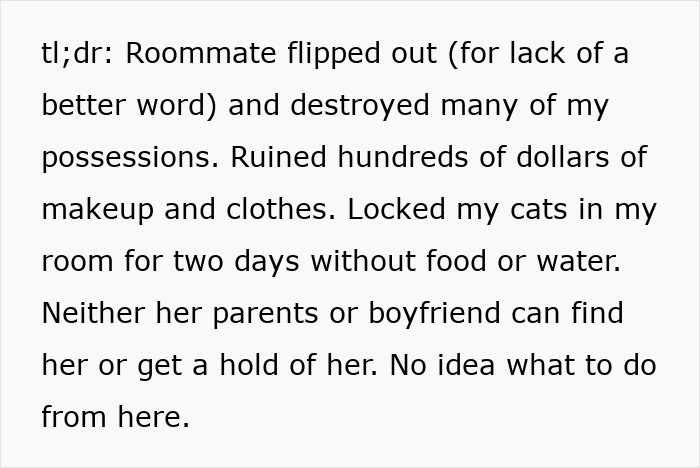
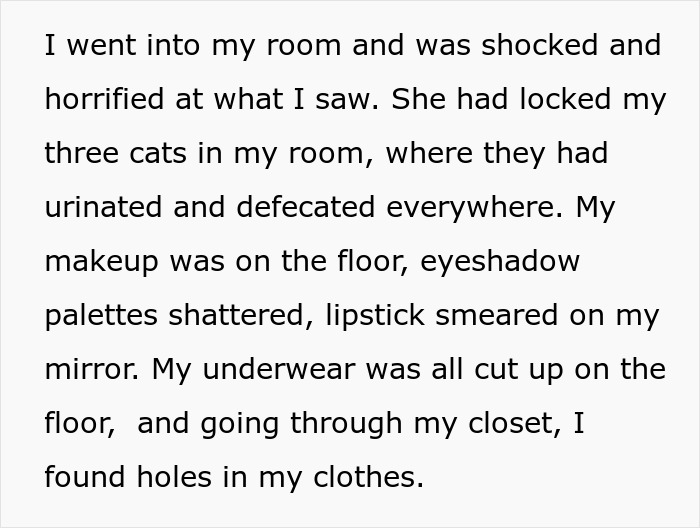
She returned two days later to find her apartment badly damaged, her belongings destroyed, and her cats locked in her room without food or water, and this also left netizens baffled

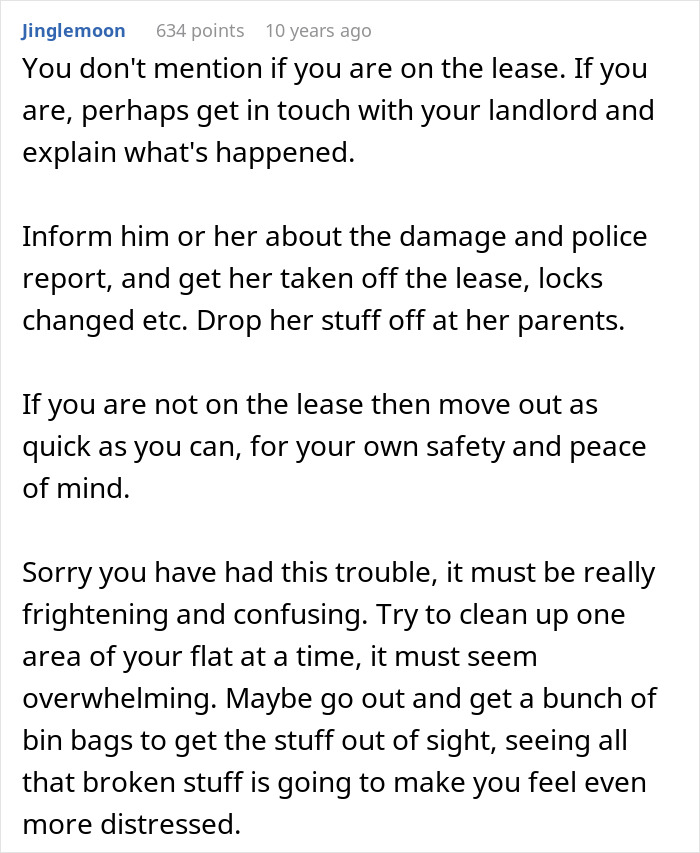



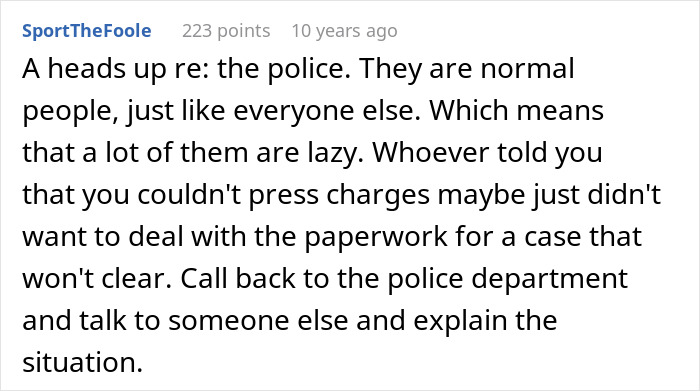
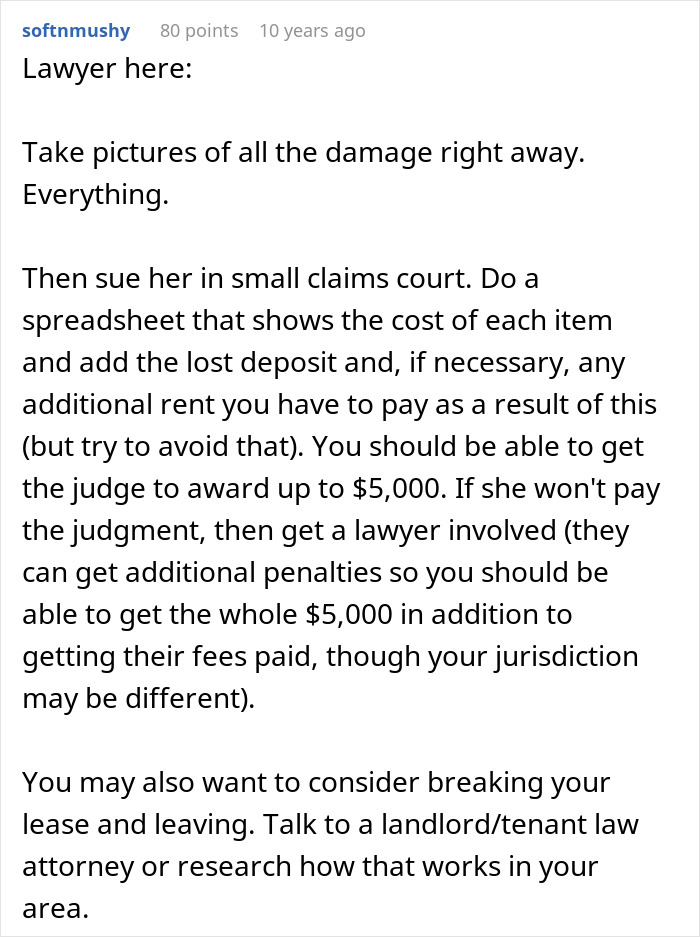

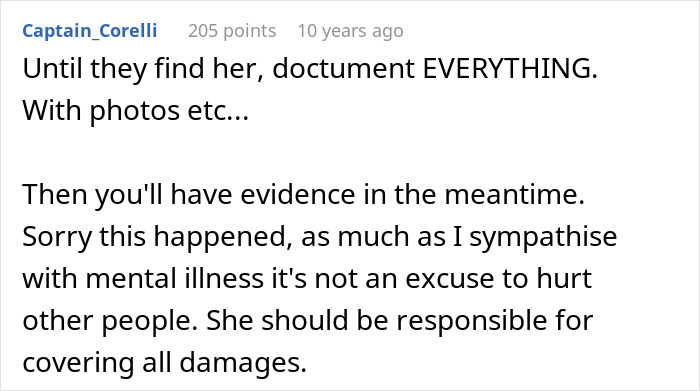


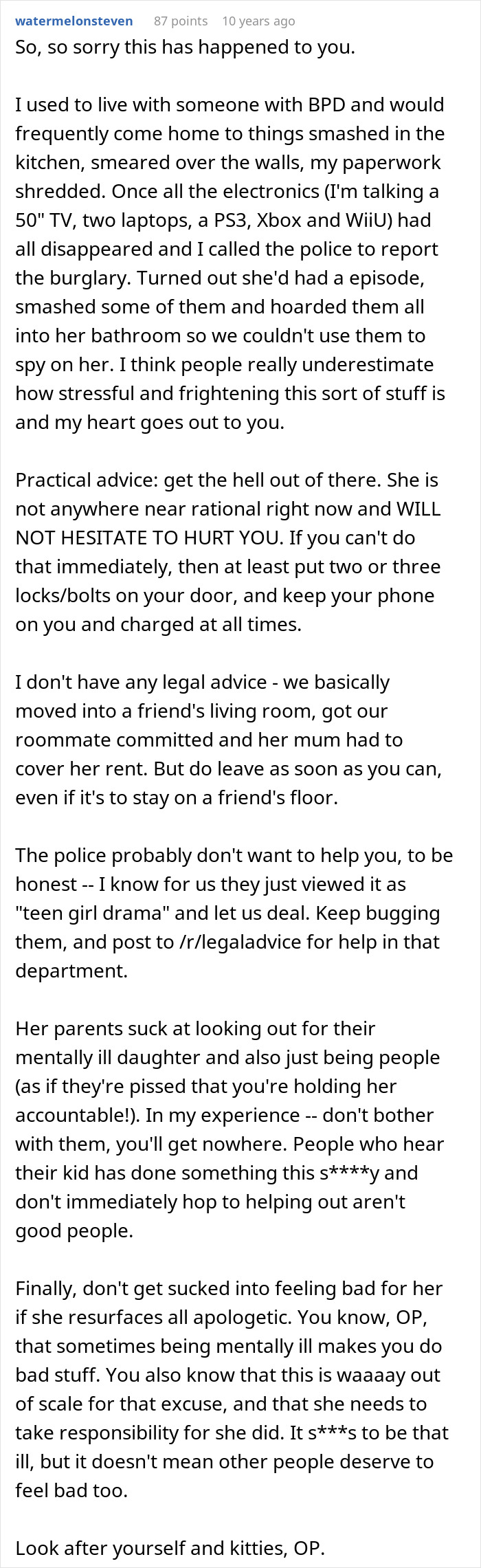
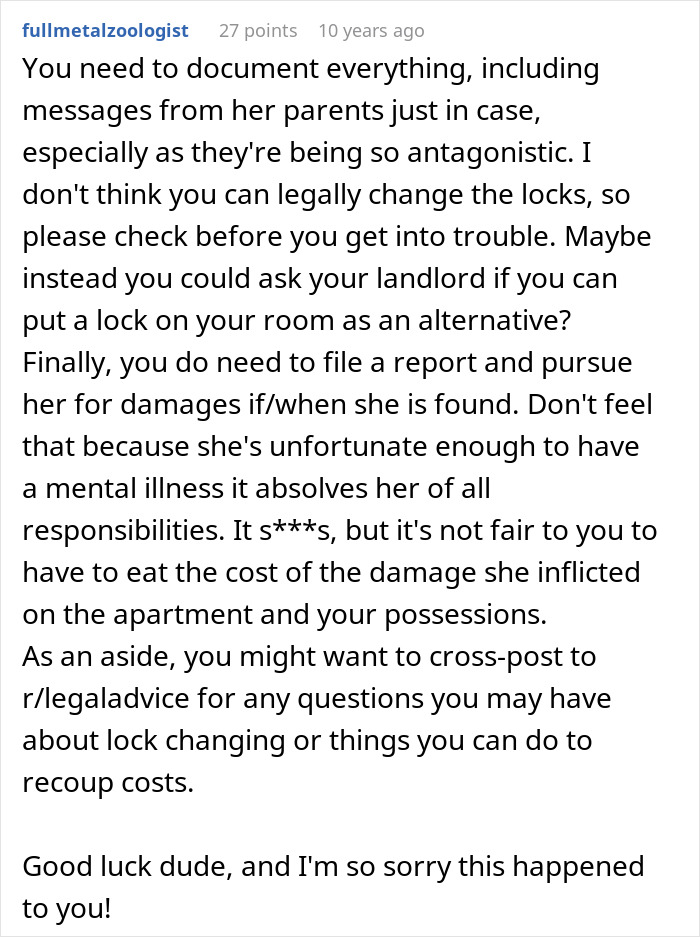



The roommate had disappeared and could not be reached, prompting her parents to file a missing-person report while the woman contacted police and documented the damage
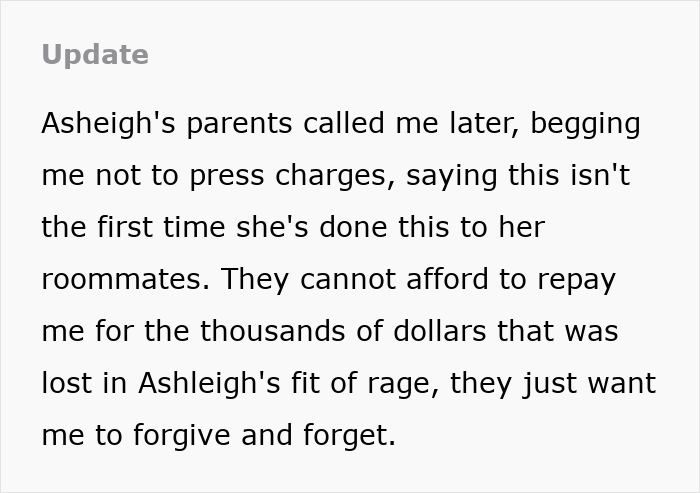

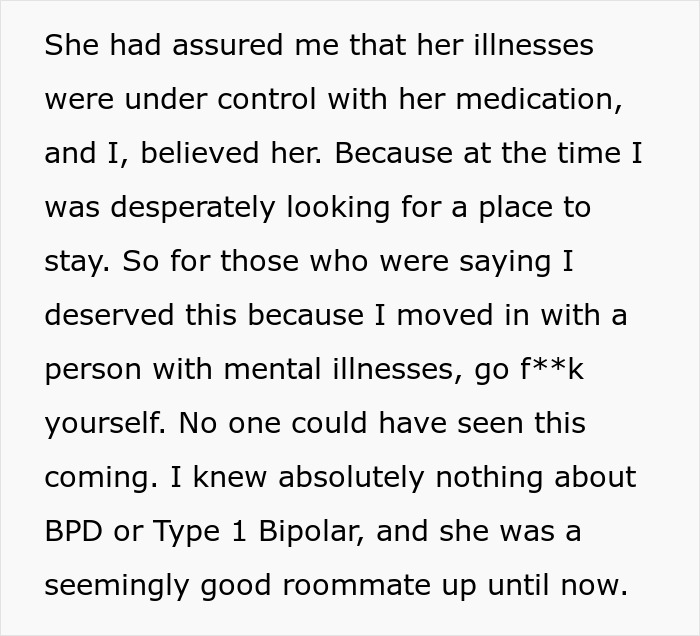



However, the roommate’s parents later admitted she was staying with them and revealed that she had allegedly behaved similarly toward previous roommates

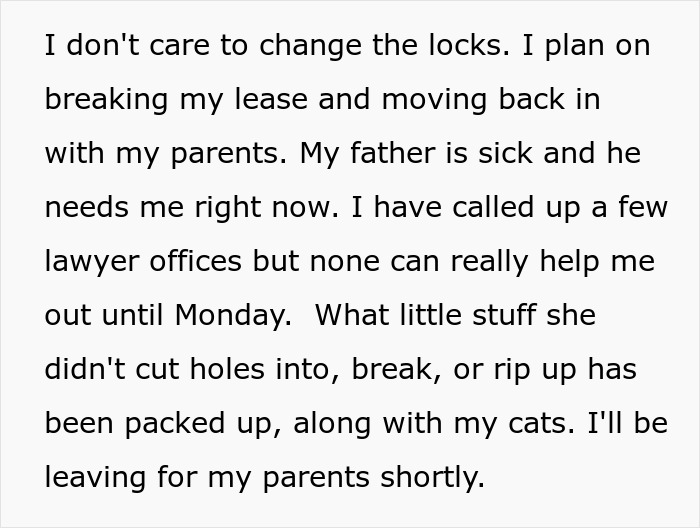
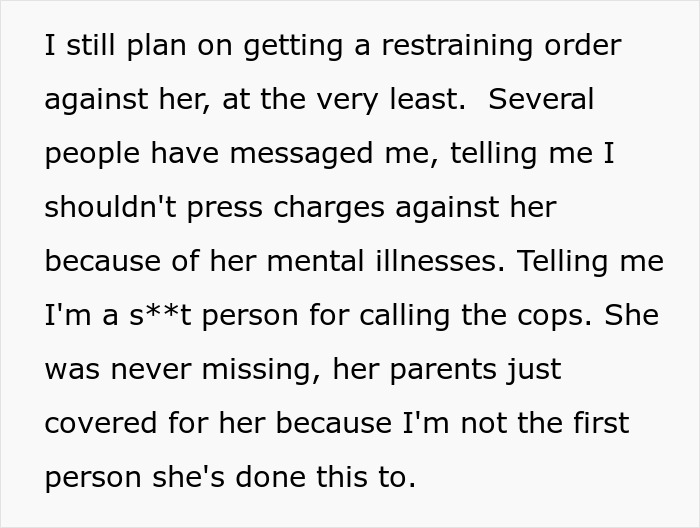

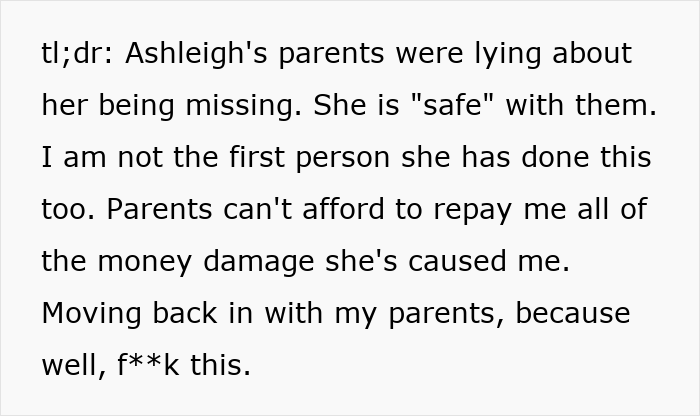
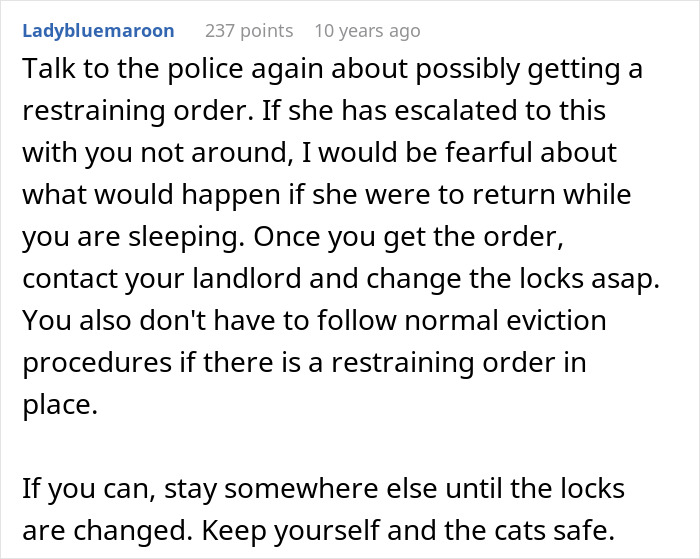
The woman decided to leave the apartment with her cats, seek legal advice, and consider pressing charges and getting a restraining order
Bipolar disorder isn’t simply a matter of being happy one day and sad the next. According to Elevate Psychiatry, it involves distinct episodes of mania and depression that can produce major changes in mood, energy, activity and functioning. Bipolar I specifically involves manic episodes that last at least seven days or are severe enough to require hospital care.
Mania can involve extreme irritability, racing thoughts, increased activity, reduced need for sleep, and unusually risky or poorly judged behavior. Perhaps one of the particularly difficult aspects of a manic episode is that the person experiencing it may not recognize how dramatically their behavior has changed.
Science Insights notes that mania can affect judgment and make it difficult for someone to function normally at home, work, or in relationships. In severe cases, psychotic symptoms can also occur. That doesn’t mean destructive behavior is inevitable, but it helps explain why someone who normally appears perfectly functional can behave dramatically differently during an acute episode.
The other diagnosis mentioned in the story, borderline personality disorder, has its own set of characteristics that can complicate relationships. Kindermind describes BPD as involving difficulties regulating emotions, impulsivity, unstable relationships, and intense, rapidly changing moods. Inappropriate or intense anger and difficulty controlling anger can also be symptoms.

However, an important piece of context when discussing a story like this is that mental illness and violence are not interchangeable concepts. In fact, the overwhelming majority of people with mental illness are not violent and are more likely to be victims of violence than perpetrators, and Personality Disorders affirms this.
A particular person’s destructive actions therefore shouldn’t be generalized to everyone with bipolar disorder or BPD. It is also important to note that treatment for bipolar disorder is generally an ongoing process rather than a permanent guarantee that symptoms will never return. Treatment can include medication and psychotherapy, which can help control symptoms and reduce the frequency and severity of episodes.
Still, the cats’ welfare adds another serious dimension to the story and makes the situation more than a dispute over damaged property. Bridge Picks’ guidance on animal cruelty identifies failure to provide necessary food, water, or veterinary care as potential neglect, although the legal determination depends on the circumstances and jurisdiction.
Perhaps the biggest takeaway is that these two ideas don’t have to compete. Someone experiencing a severe psychiatric episode may genuinely need medical intervention and compassion, while the people affected by their actions can still feel frightened, angry and entitled to protect themselves and their property. Treatment for BPD and bipolar disorder exists, but treatment does not erase the consequences of harmful behavior.
What do you think? Where do you think the line should be between showing compassion for someone in crisis and protecting yourself from their actions? We would love to hear from you!
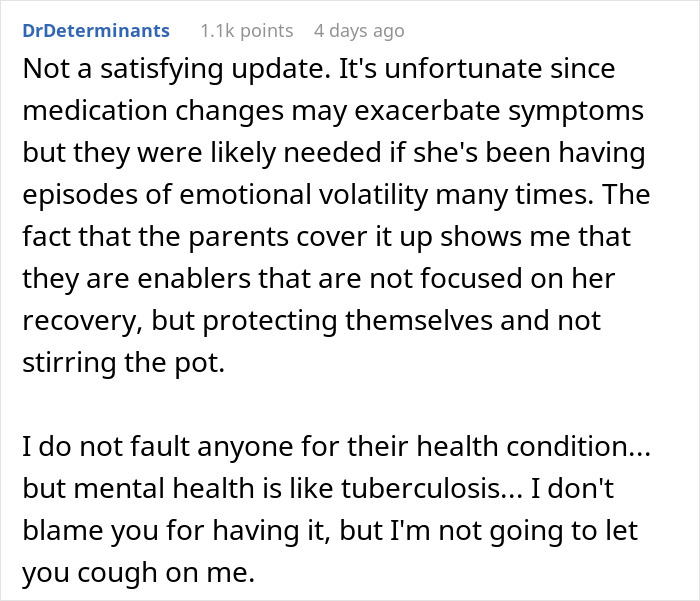
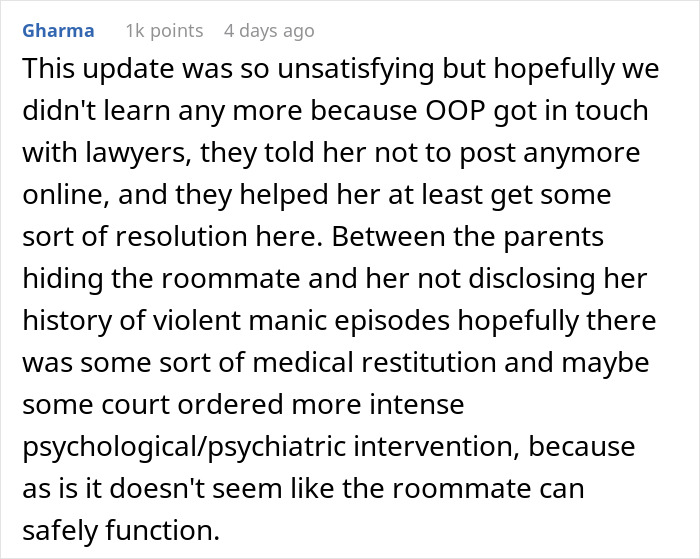
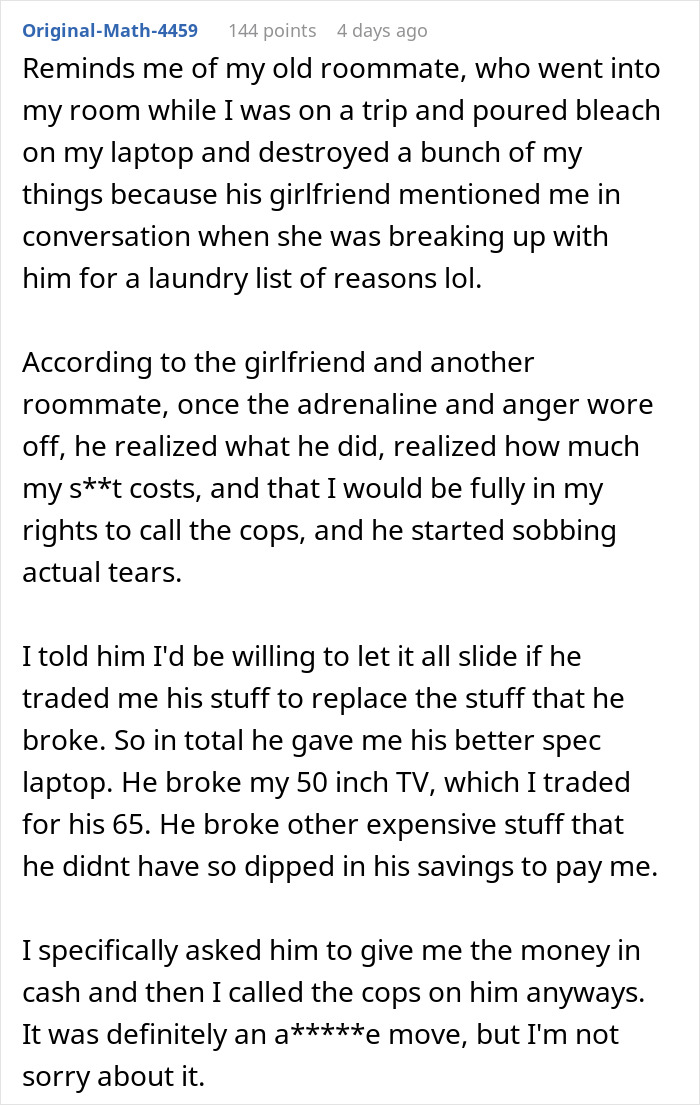
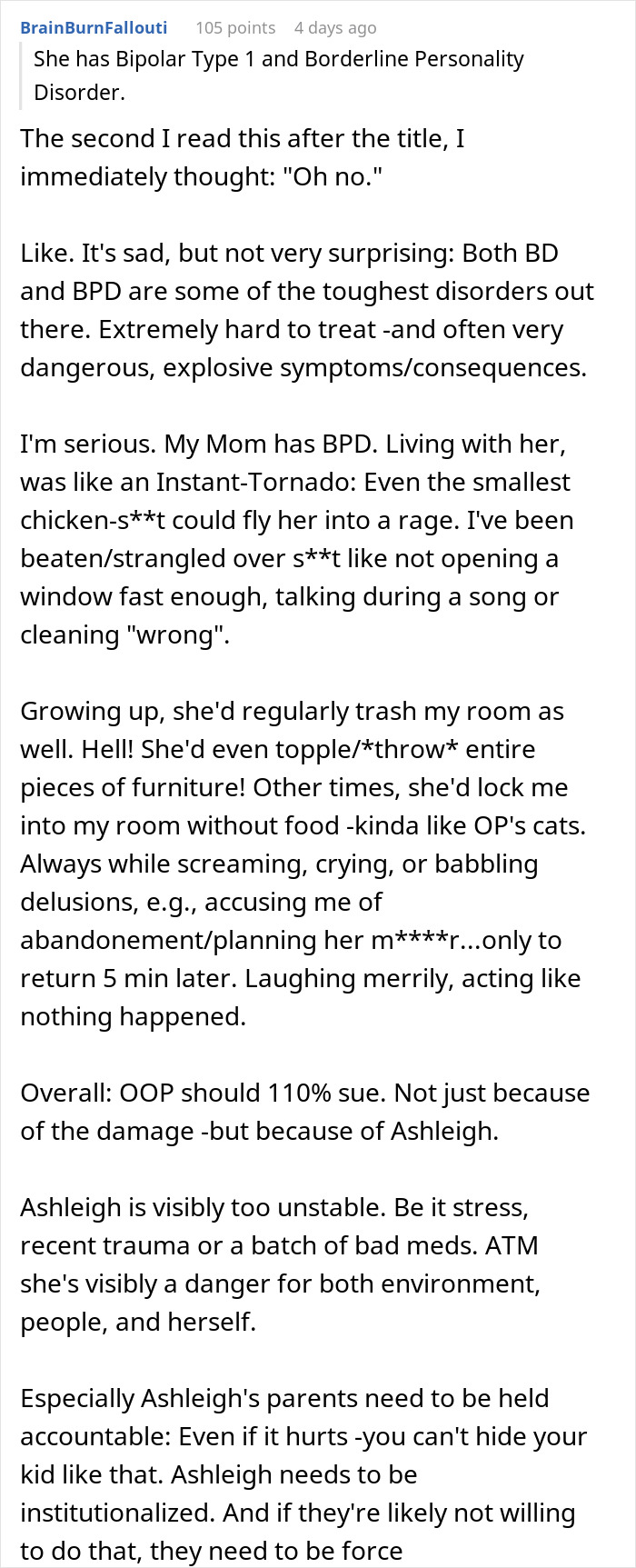
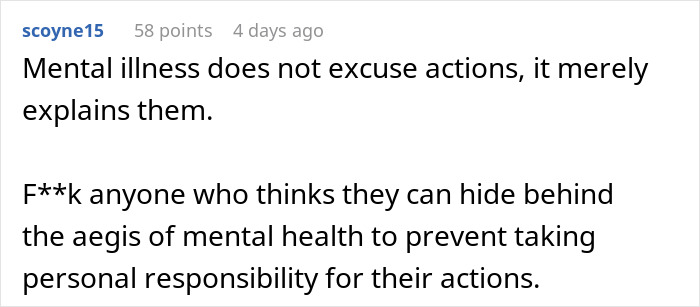
Netizens expressed sympathy for the woman and urged her to press charges because mental illnesses shouldn’t excuse grave actions














Comments are closed, but trackbacks and pingbacks are open.