A post complaining that Hollywood leading men are becoming increasingly handsome is gaining traction on social media.
While most people claim they buy a movie ticket—or subscribe to Netflix—to watch remarkable performances, they’re also seeing actors who look nothing like the men they encounter in everyday life.
To some cinephiles, this is ruining the movie experience.
A debate about Hollywood has erupted after someone claimed Hollywood’s leading men are becoming too attractive
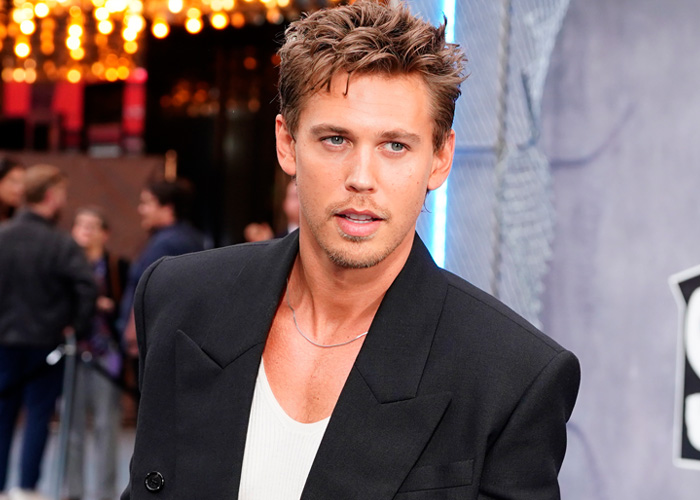
Image credits: Ian West/Getty Images
“My woke take is that more films need actors who are uglier, older, and fatter and I’m not joking,” @CarbonHelium wrote on X.
“This isn’t even about representation (although we still need more), but I want to see people with unique faces instead of the same conventionally attractive supermodels,” they stated.
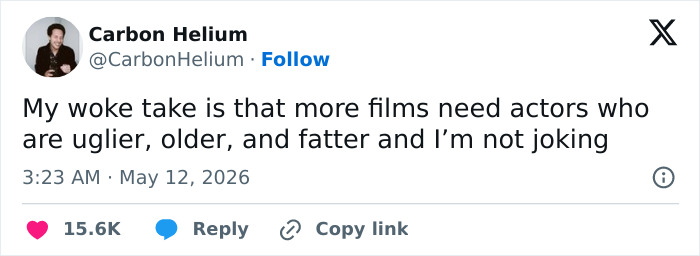
Image credits: CarbonHelium
THESE USED TO BE LEADING MEN https://t.co/33nMYzXoLG pic.twitter.com/rfOtOI2V4D
— it’s Holly! (@NOTGH_Holly) May 13, 2026
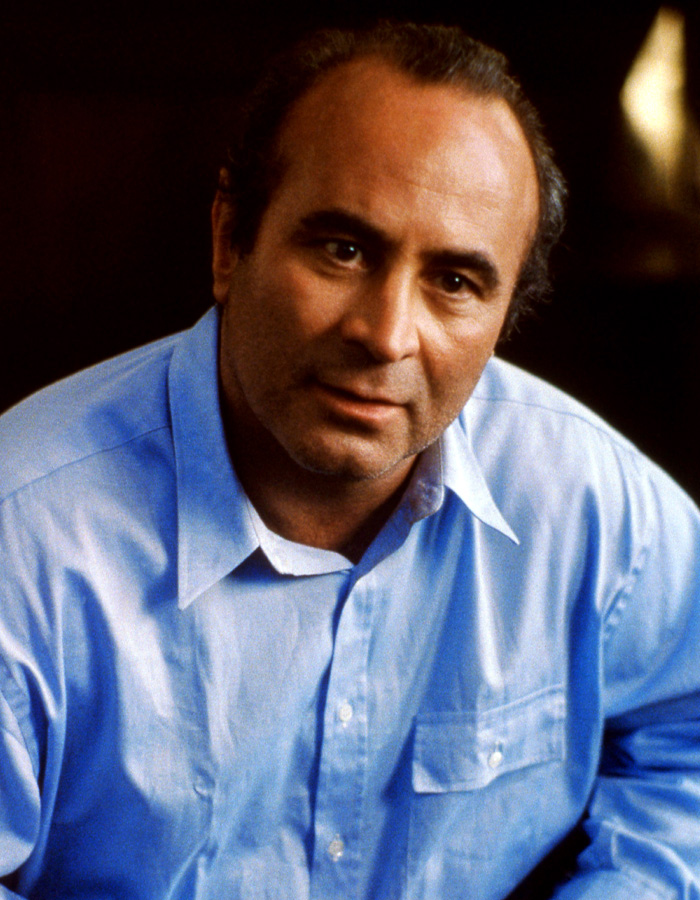
Image credits: Bill Nation/Getty Images
The tweet received more views when it was reposted by another user, @NOTGH_Holly, who exclaimed, “THESE USED TO BE LEADING MEN” alongside pictures of Oscar winner Walter Matthau and Bob Hoskins.
While Matthau is known for his many roles in the ‘60s and ‘70s, Hoskins’ “tough guy” characters dominated the big screen in the ‘80s.
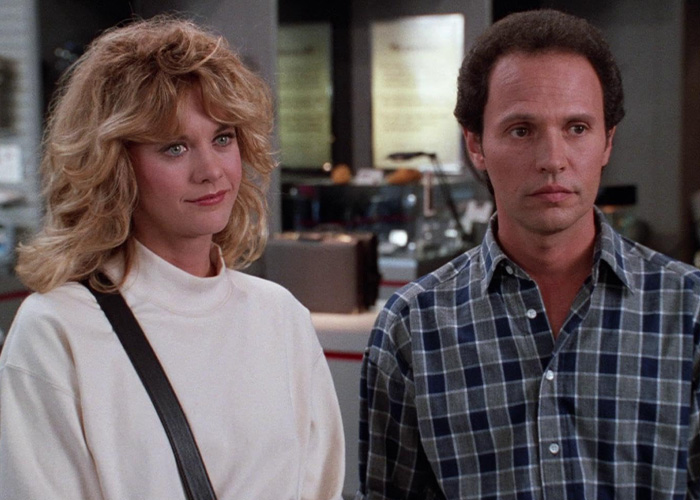
Image credits: Columbia Pictures
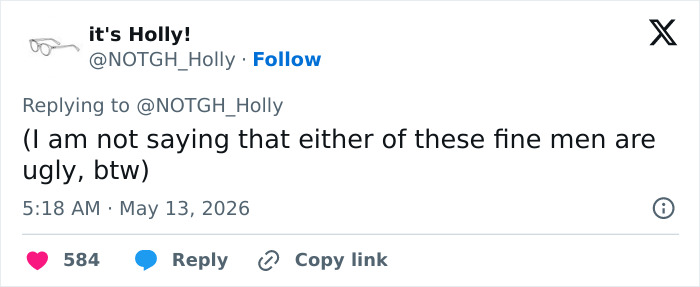
Image credits: NOTGH_Holly
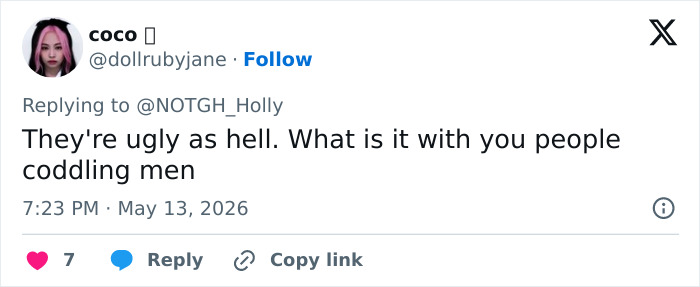
Image credits: dollrubyjane
Referring to today’s leading men, another user chimed in, “It’s hard to buy into a rough and tough leading man when he looks like he just stepped out of a clothing catalog.”
The 1989 rom-com When Harry Met Sally is a clear example of a leading pair that would be rare nowadays, one person argued. “Billy Crystal once bagged Meg Ryan and that was beautiful.”
Social media users complained that audiences increasingly see actors who don’t resemble non-famous people
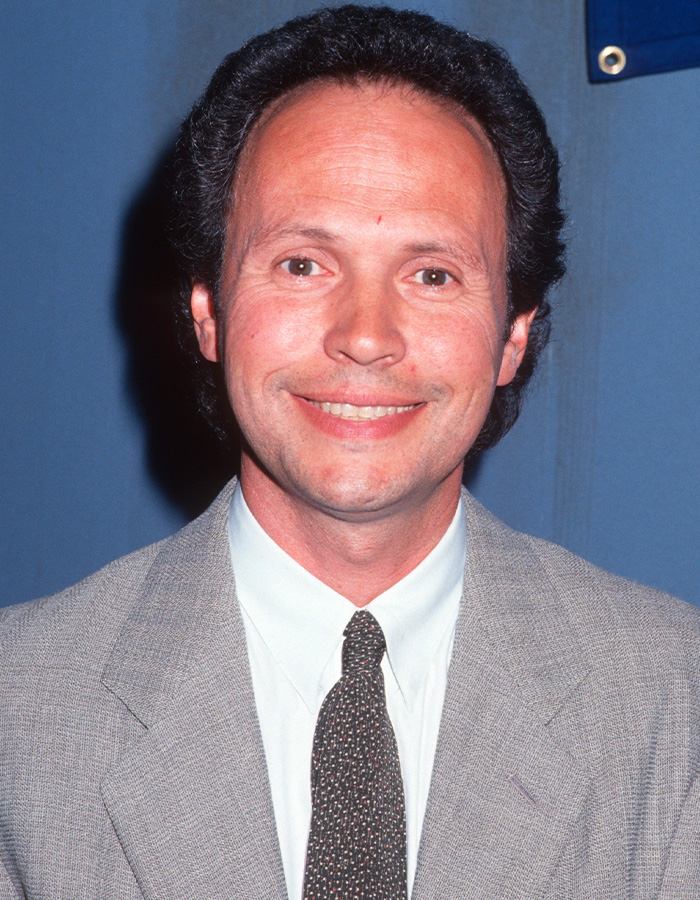
Image credits: Ron Galella/Getty Images
Billy Crystal once bagged Meg Ryan and that was beautiful pic.twitter.com/qoVxkB2tar
— 2.718281828459045235… (@Earl___________) May 13, 2026
The discussion inevitably turned to Australian actor Jacob Elordi.
“More films should just cast a male lead that isn’t Jacob Elordi because wdym HE got to play Frankenstein’s monster,” someone else quipped.
A separate movie fan joked that actors who don’t look like Jacob Elordi, Timothée Chalamet, or Austin Butler have now fallen under the category of “character actors.”
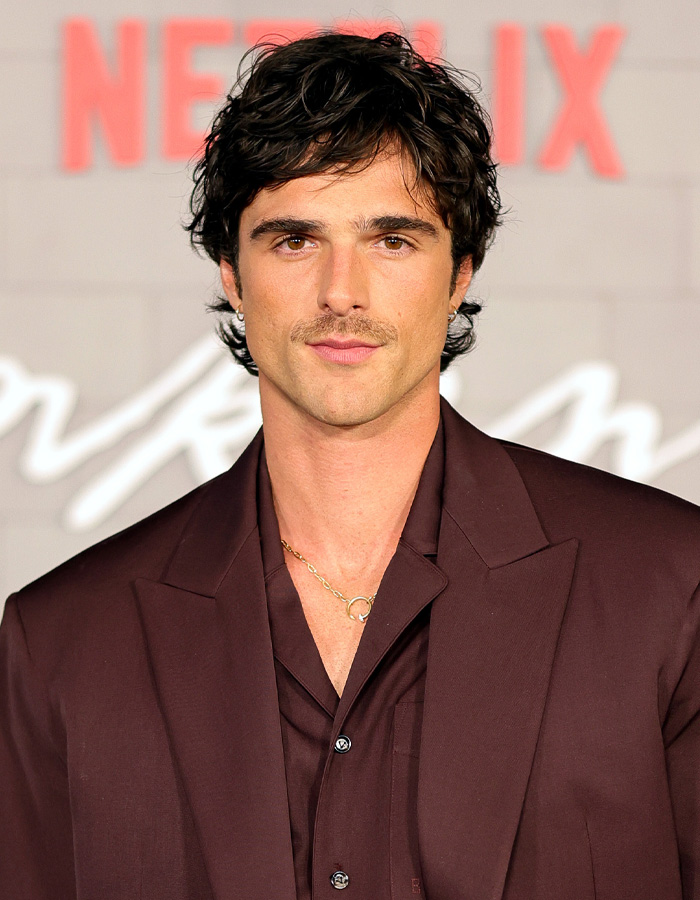
Image credits: Savion Washington/Getty Images
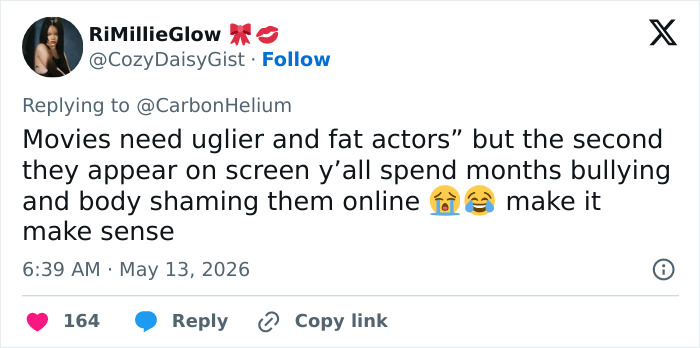
Image credits: CozyDaisyGist
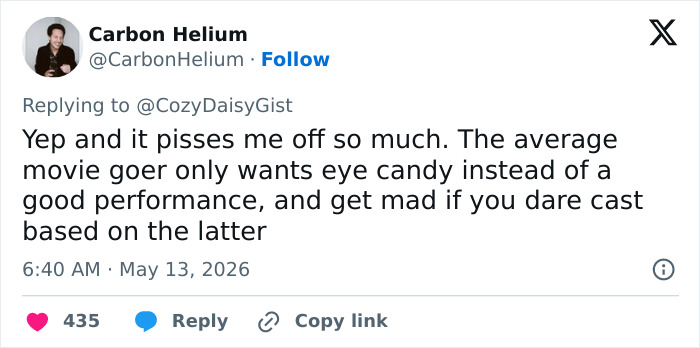
Image credits: CarbonHelium
Stanley Tucci. pic.twitter.com/Gm7xhsl90y
— CINEMA 505 (@CINEMA505) May 7, 2026
The term refers to stars known for playing unusual or eccentric supporting roles who are rarely cast as leads in blockbuster films. Modern examples include Stanley Tucci, John Lithgow, and J.K. Simmons.
The perceived shift in Hollywood beauty standards, people argued, not only excludes talented actors based on their looks but also affects the movie experience for viewers, making the characters on screen feel less relatable.
While the viral conversation focused on male leading actors, similar claims have been made about female stars becoming more attractive, with some people lamenting that they have lost their expressiveness due to alleged Botox injections.
Many agreed that the difference is also affecting actresses, many of whom now look like models
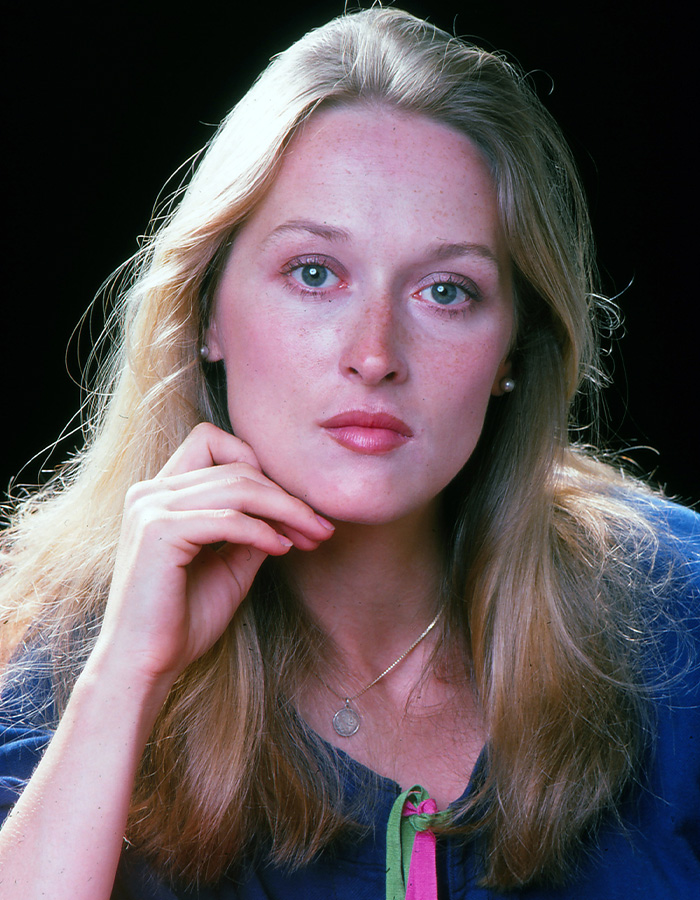
Image credits: Jack Mitchell/Getty Images
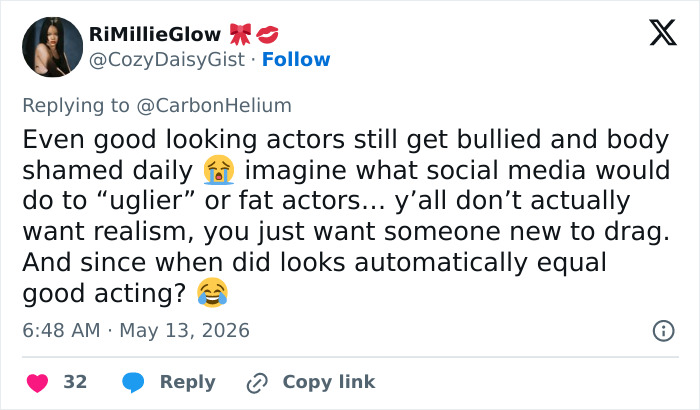
Image credits: CozyDaisyGist
Comparing retro photos of Glenn Close and Meryl Streep to recent pictures of Megan Fox, Lindsay Lohan, and Sydney Sweeney, one TikTok user argued that society now “expects our actresses to look like supermodels, whereas supermodels used to be supermodels, and actresses were actresses.”
“This group of women has some of the most prolific acting credits of all time. And all of them look like real people,” the user, @trainingforamazing, pointed out while referring to the pictures of young Glenn and Meryl.
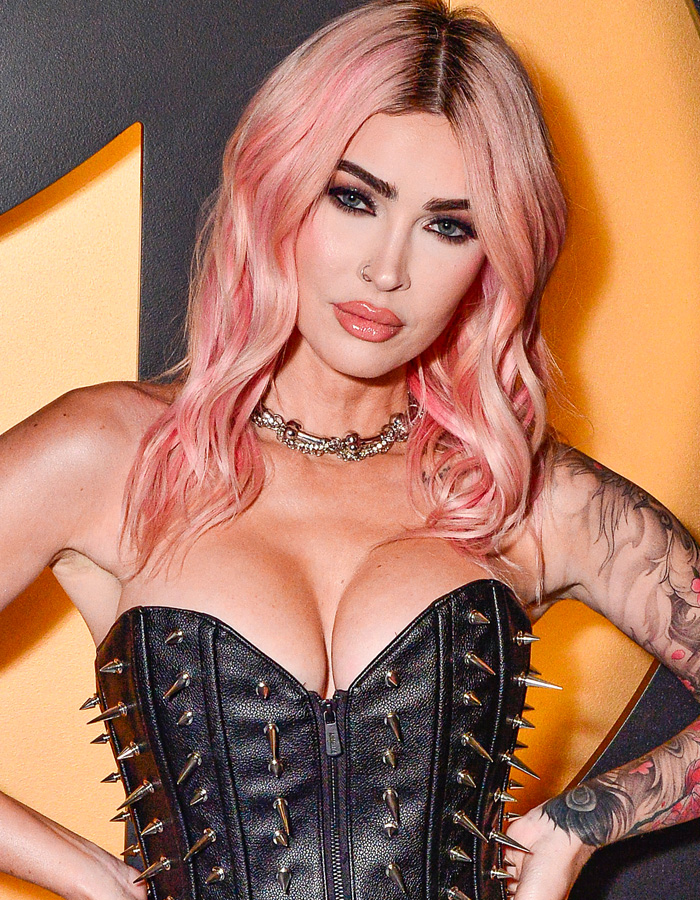
Image credits: Jerod Harris/Getty Images
@trainingforamazing I miss real faces on screen #beautystandards #plasticsurgery #feminist ♬ original sound – Faith
To some viewers, the industry is increasingly rewarding pretty faces at the expense of talent.
“My theory that movies and shows where everyone is beautiful are almost always sh*t advances one step further,” one netizen commented.
A recent study suggested perceived attractiveness influences whether people would cast an actor in a specific role
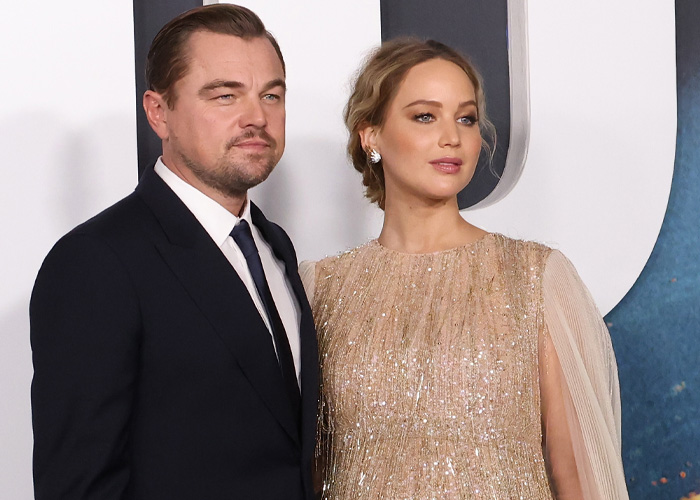
Image credits: Taylor Hill/Getty Images
However, others questioned the theory, citing examples of conventionally attractive actors who are also talented and have been recognized for their work, such as Leonardo DiCaprio, Matt Damon, Jennifer Lawrence, and Halle Berry.
There are also many examples of attractive actors who were talented leading stars in “old Hollywood,” like James Dean, Marlon Brando, Elizabeth Taylor, and Sophia Loren.
I’ve watched all his movies and am convinced James Dean invented “cool”. pic.twitter.com/WCq0JkDPXX
— Márta (@UrUnpaidPundit) May 12, 2026
A 2024 study found that perceived attractiveness was one of the strongest factors shaping audiences’ beliefs about whether an actor “fit” a role.
Researchers found that viewers sometimes rejected actors who looked too glamorous or “too Hollywood” for relatable roles. One participant said a glamorous actress looked better suited for a Marvel movie than an indie-style role.
People shared their thoughts on whether the requirements for being a leading actor have become more narrow compared with the past

Image credits: bigbigjon85823
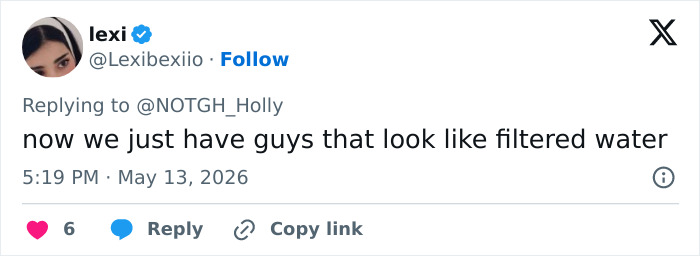
Image credits: Lexibexiio
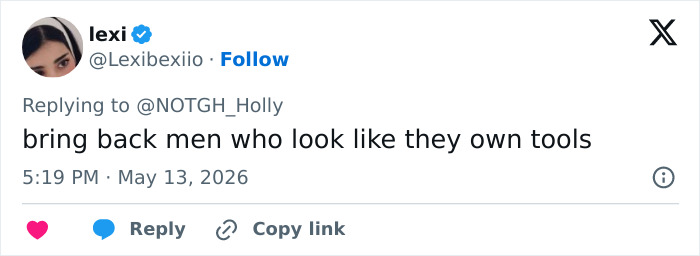
Image credits: Lexibexiio
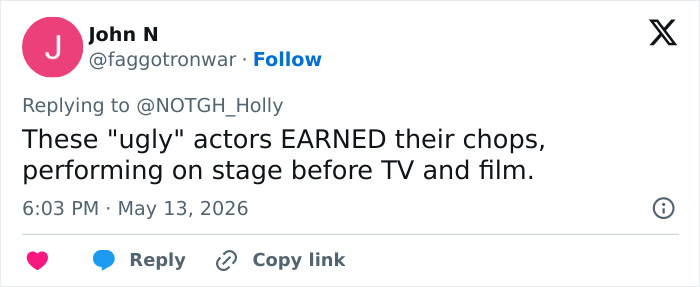
Image credits: faggotronwar
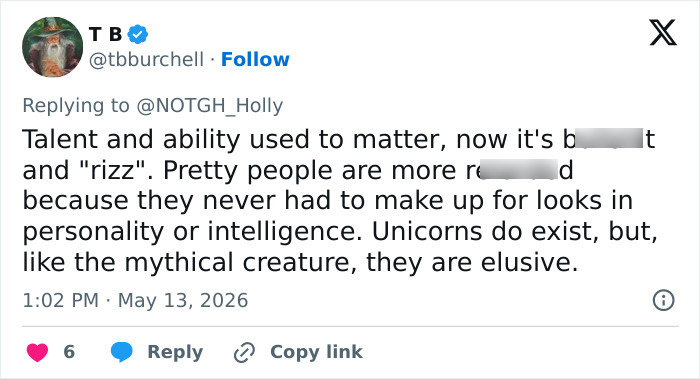
Image credits: tbburchell

Image credits: withnoplan1
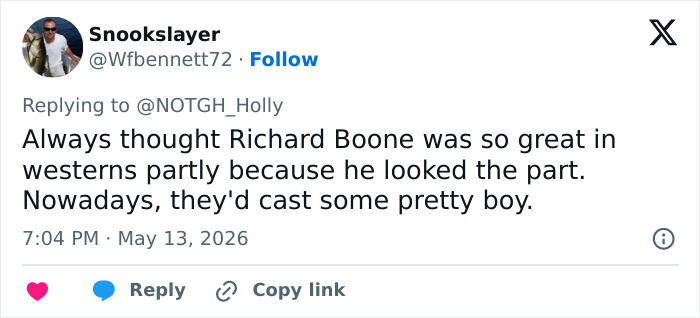
Image credits: Wfbennett72
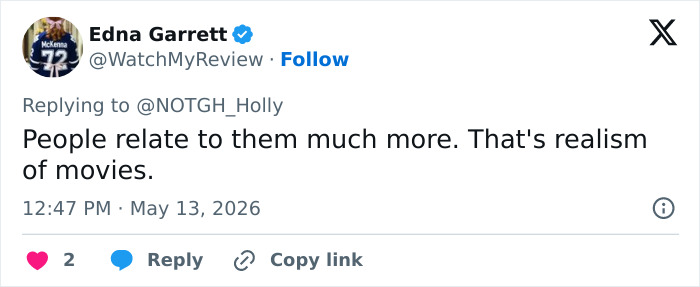
Image credits: WatchMyReview
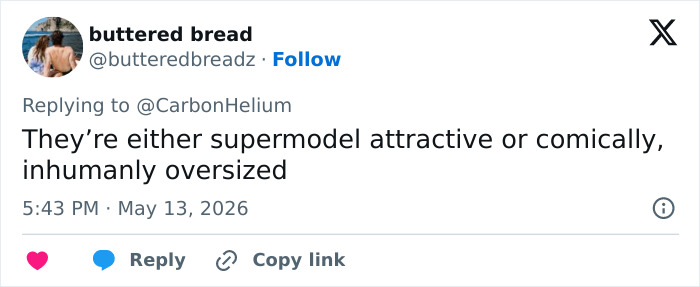
Image credits: butteredbreadz
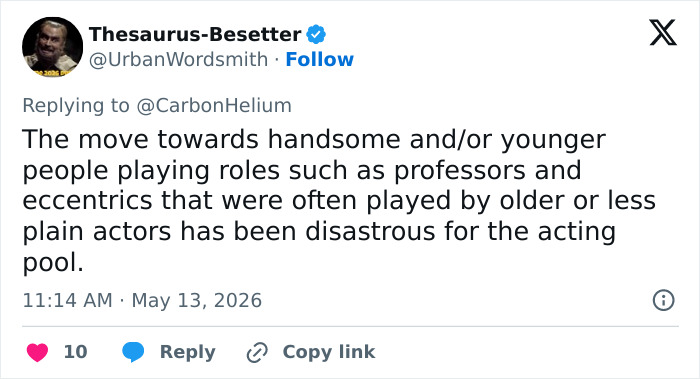
Image credits: UrbanWordsmith
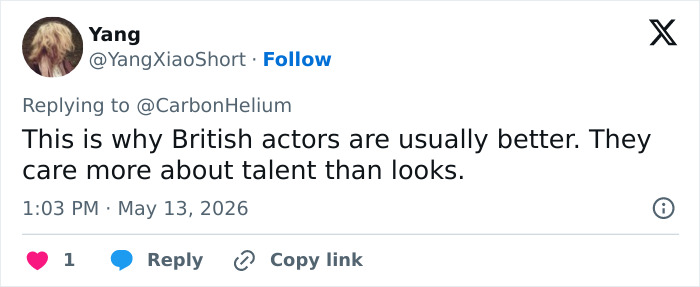
Image credits: YangXiaoShort
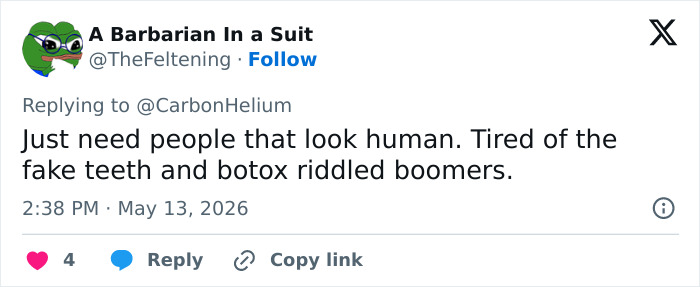
Image credits: TheFeltening
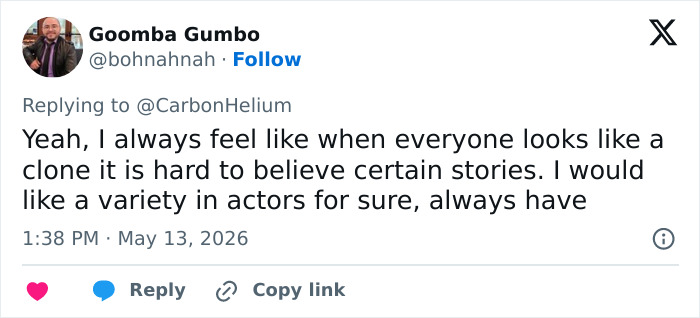
Image credits: bohnahnah
Comments are closed, but trackbacks and pingbacks are open.